

Reinforcement-learning environments framework for .NET


Gym.NET is a native .NET library for reinforcement learning: Gymnasium's environments and API, the same results for the same seed and actions, entirely in pure C#.

24 environments playing, see all environments
Gym.NET gives .NET code the environments that Python's Gymnasium gives reinforcement-learning research, without embedding
CPython and without the GIL: the same Env contract (Reset, Step, spaces, wrappers, vector envs), the same 39
environment ids and the same numbers, with vector environments that step on worker threads instead of processes. It is for
training and evaluating agents in C#, for moving a Gymnasium experiment to .NET and checking that it still produces what it
produced, and for writing new environments against a contract that is already known.
The compatibility target is Gymnasium v1.4.0. Given the same seed and actions, Gym.NET returns the same observations,
rewards, terminated/truncated flags and infos as Gymnasium, bit for bit, and renders the same frames, pixel for pixel
(MuJoCo's within a measured margin, below). When Gym.NET and Gymnasium differ, Gymnasium is treated as the
source of truth and Gym.NET aligns, except for the 14 deliberate differences the
release notes list. A test suite that
runs Gymnasium itself inside the test process checks this, call by call.
Gym.NET focuses on:
- Gymnasium's API and names:
Env<TObs, TAct>,Gymnasium.Make,Reset(seed)returning(observation, info),Stepreturning(observation, reward, terminated, truncated, info). - Bit-for-bit values: the same observations, rewards, flags and infos for the same seed and actions, checked by a live parity suite that runs Gymnasium inside the test process.
- Pixel-for-pixel frames:
rgb_arrayframes equal to Gymnasium's (MuJoCo's within a measured margin). - Managed code all the way down: Box2D 2.3.0 and a MuJoCo engine written in C#, so there is no native code to install.
- Threads, not processes:
AsyncVectorEnvsteps its sub-envs on worker threads, with Gymnasium's protocol and the same bits asSyncVectorEnv. - .NET types where Gymnasium's shape allows them: generic envs, enums beside Gymnasium's strings, typed info records,
ValueTaskstepping.
Getting started walks through making envs, seeding, spaces, rendering, wrappers and vector envs.
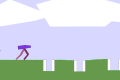
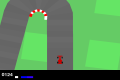
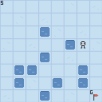
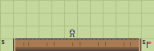
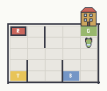
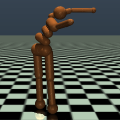
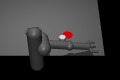
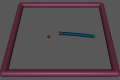
One still for each of the 24 visually distinct environments of the showreel; every still opens its example project. All 39 ids are listed in What is in 1.0.
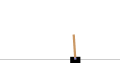
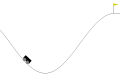

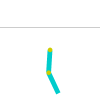
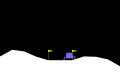








dotnet add package Gym.NET.Environments| Package | What it brings |
|---|---|
| Gym.NET.Environments | The 39 environments with their Box2D and MuJoCo engines; brings Gym.NET and Gym.NET.Rendering |
| Gym.NET | The API alone, for writing your own environments: Env<TObs, TAct>, spaces, wrappers, the registry, vector envs, checkers |
| Gym.NET.Rendering | pygame's drawing in managed C#: the rasterizer behind the rgb_array frames, and Gymnasium's play |
| Gym.NET.Rendering.Avalonia | Optional: a window for render_mode "human" on Windows, Linux and macOS |
| Gym.NET.Rendering.WinForm | Optional: the same on Windows Forms |
Gym.NET 1.0 targets .NET 8, .NET 10 and .NET 11. Coming from 0.2: move every Gym.NET package to 1.0.0 at once and remove any NumSharp.Lite reference (migrating from 0.2).
- 39 environment ids - classic_control, box2d, toy_text and MuJoCo, with Gymnasium's names and versions, registered for
Gymnasium.MakebeforeMainruns. See Environments. - Gymnasium's API in C# -
Env<TObs, TAct>, all ten spaces,Gymnasium.Make,MakeVecandRegister, and every wrapper but Atari's and the JAX/PyTorch conversions. See Getting started. - Bit for bit, pixel for pixel - a parity suite runs Gymnasium inside the test process and compares every value and every frame. See Architecture.
- No native code, no CPython - Box2D 2.3.0 and a MuJoCo engine that computes what MuJoCo 4.0.0 computes, both managed C# inside Gym.NET.Environments.
- Vector environments -
SyncVectorEnvin every autoreset mode,AsyncVectorEnvand every vector wrapper, throughGymnasium.MakeVec. - Async, on threads -
AsyncVectorEnvsteps its sub-envs on worker threads (the thread pool, dedicated threads, or a thread per env) with Gymnasium's protocol and the same bits asSyncVectorEnv, without processes or a GIL.StepAsyncis aValueTask, completing synchronously unless an environment has asynchronous work to do, and the viewers have an asynchronous contract (IAsyncEnvViewer). - .NET-typed -
RenderMode,AutoresetModeandVectorizeModeenums beside Gymnasium's strings, a typed info record per env, typedSamplemasks. - Desktop windows -
humanmode in an Avalonia (Windows, Linux, macOS) or Windows Forms window, with keyboard play throughplayand, for MuJoCo, Gymnasium's mouse and key controls. - Your own environments - write an
Env<TObs, TAct>, register it and check it with Gymnasium's checkers. See Creating custom environments. - Faster than Gymnasium - per step, from
x1.4(CartPole) tox14.4(Acrobot) in the nine environments measured. See Performance.
using System;
using Gym;
using Gym.Envs;
using NumSharp;

// make builds the registered env inside Gymnasium's wrappers: TimeLimit(500), OrderEnforcing, PassiveEnvChecker.
using Env<NDArray, NDArray> env = Gymnasium.Make<NDArray, NDArray>("CartPole-v1");
env.ActionSpace.Seed(42);
NDArray observation = env.Reset(seed: 42).Observation;
double episodeReturn = 0;
while (true) {
    using NDArray action = env.ActionSpace.Sample();   // 0 (push left) or 1 (push right)
    var (next, reward, terminated, truncated, info) = env.Step(action);
    observation.Dispose();                            // the arrays an env returns belong to the caller
    observation = next;
    episodeReturn += reward;
    if (terminated || truncated)
        break;
}

observation.Dispose();
Console.WriteLine($"Episode return: {episodeReturn}");
Reset(seed) returns (observation, info). Step(action) returns (observation, reward, terminated, truncated, info):
terminated means the task ended (the pole fell), and truncated means a limit cut the episode short (TimeLimit's 500
steps). The render mode is chosen when the env is built: Gymnasium.Make("CartPole-v1", new { render_mode = "rgb_array" }).
examples/CartPole trains a policy that balances
the pole, playing 100 carts at once through Gymnasium.MakeVec. examples/
has one project for each of the 24 environments in the showreel above. Each plays its env with the same agent, a
hand-written controller, Gymnasium's heuristic, value iteration or a trained linear policy, headless, in a window
(--render) or from your keyboard (--play).
Steps per second of one environment stepped in a loop of sampled actions, Gymnasium v1.4.0 against Gym.NET on the same
machine. The ratio is Gym.NET's steps divided by Gymnasium's: x2 is twice Gymnasium's speed.
| Family | Environment | Gymnasium (steps/s) | Gym.NET (steps/s) | Ratio | Gym.NET allocates per step |
|---|---|---|---|---|---|
| classic_control | Acrobot | 11,696 | 168,049 | x14.4 | 4,019 B |
| Pendulum | 12,930 | 48,601 | x3.8 | 11,088 B | |
| MountainCar | 43,440 | 145,364 | x3.3 | 3,192 B | |
| CartPole | 65,464 | 93,898 | x1.4 | 3,266 B | |
| toy_text | Taxi | 36,414 | 164,917 | x4.5 | 4,681 B |
| FrozenLake | 59,436 | 213,280 | x3.6 | 4,283 B | |
| box2d | BipedalWalker | 2,499 | 9,024 | x3.6 | 35,071 B |
| CarRacing | 74 | 164 | x2.2 | 3,631,032 B | |
| LunarLander | 12,503 | 19,744 | x1.6 | 8,993 B |
Measured 2026-11-11, before the MuJoCo environments landed, with net10.0 Release builds against Gymnasium v1.4.0 on CPython 3.12.12 (NumPy 2.4.2, pygame-ce 2.5.8, Box2D 2.3.10): five rounds of Gym.NET and four of Gymnasium, interleaved, medians. Single runs strayed up to 25% from the median and the machine's load moves the absolute numbers, so the ratio is the steadier figure. Only these nine environments are measured. The method, the CarRacing and LunarLander profiles and the table are in the code review.
| Area | Contents |
|---|---|
| Core | Env<TObs, TAct>, IEnv, Wrapper and the observation, action and reward wrapper bases, StepResult/ResetResult, Info, Metadata, RenderResult, every Gymnasium error |
| Spaces | Box, Discrete, MultiBinary, MultiDiscrete, Tuple, Dict, Text, Sequence, Graph, OneOf, and SpaceUtils (flatten, unflatten, flatdim) |
| Registry | Gymnasium.Make, Gymnasium.MakeVec, Gymnasium.Register, Gymnasium.Spec, Gymnasium.PprintRegistry; constructor arguments by Python name, from an anonymous object, a dictionary or a generated options record |
| Wrappers | Every Gymnasium wrapper but AtariPreprocessing and the JAX/PyTorch conversions: TimeLimit, Autoreset, RecordEpisodeStatistics, the observation, action and reward transforms (ResizeObservation over OpenCV's resize in C#, FrameStackObservation, NormalizeObservation, ClipAction, NormalizeReward, ...), RecordVideo, HumanRendering |
| Vector envs | VectorEnv<TObs, TAct>, SyncVectorEnv in every autoreset mode, AsyncVectorEnv on worker threads, every vector wrapper, CartPoleVectorEnv |
| Checkers | EnvChecker.CheckEnv, PassiveChecker, EnvMatch |
| Environments | classic_control: CartPole-v0/v1, MountainCar-v0, MountainCarContinuous-v0, Pendulum-v1, Acrobot-v1. box2d: LunarLander-v3, LunarLanderContinuous-v3, BipedalWalker-v3, BipedalWalkerHardcore-v3, CarRacing-v3 (on Box2D 2.3.0 in managed C#). toy_text: FrozenLake-v1, FrozenLake8x8-v1, CliffWalking-v1, CliffWalkingSlippery-v1, Taxi-v4, Blackjack-v1. mujoco: Ant, HalfCheetah, Hopper, Humanoid, HumanoidStandup, InvertedPendulum, InvertedDoublePendulum, Pusher, Reacher, Swimmer, Walker2d, each -v4 and -v5 (on Gym.NET's own engine, bit for bit with MuJoCo 4.0.0) |
| Rendering | rgb_array and ansi frames equal to Gymnasium's (MuJoCo's within one level, below); human mode in an Avalonia or Windows Forms window |
MuJoCo's environments step bit for bit with MuJoCo 4.0.0. Gym.NET draws their frames itself: against Gymnasium's GPU frames, 0.07% (InvertedPendulum) to 16% (Humanoid) of the pixels differ, nearly all by one level. The release notes list what 1.0 leaves out and every known difference from Gymnasium: docs/releases/RELEASE_1.0.0.md.
- The documentation site: these pages, the API reference, and every environment
playing in its 8-bit gallery (built from
docs/by.github/workflows/docs.yml). - Getting started: making envs, seeding, spaces, rendering, wrappers, vector envs.
- Creating custom environments:
an
Env<TObs, TAct>, its registration, and checking it. - Migrating from 0.2 to 1.0: the old
calls and their replacements, and
Gym.Legacyfor code that cannot move yet. - Architecture: the packages, and how Gym.NET is held to Gymnasium's behavior.
- Development and testing: building, the unit suite, and the live parity suite.
- Gymnasium - the Python library whose API and behavior Gym.NET is held to; v1.4.0 is the pinned reference.
- NumSharp - the arrays and NumPy-exact random generators under every Gym.NET environment.
- SciSharp STACK - the ecosystem Gym.NET belongs to.
Gym.NET depends on SixLabors.ImageSharp 2.1.13, the last release under the Apache-2.0 license. GitHub published five
advisories against it on 2026-10-07, which NuGet reports in your restore as NU1902/NU1903 (and which fail it under
TreatWarningsAsErrors). None of them is reachable through Gym.NET: it never encodes or decodes TIFF, never runs
histogram equalization, and decodes only its own embedded PNG assets. If you don't use ImageSharp yourself on untrusted
input, you can suppress them; the release notes list the five advisories and the NuGetAuditSuppress lines.
Apache-2.0, every package. Gymnasium's environment assets are used under Gymnasium's MIT license; the sources Gym.NET translates (Box2D, SDL_gfx, SDL_ttf, OpenCV's resize, CPython's difflib, json and math routines, pygame-ce's anti-aliased lines), the score glyphs CarRacing records from pygame, and MuJoCo's font and compiled models are credited in THIRD-PARTY-NOTICES.md, which every package carries.